
Replit vs Lovable vs pre.dev: A Practical Comparison
A restaurant owner beat a developer to shipping a digital menu. But that test used one tool. So we handed the same brief to the three platforms people actually choose between: Replit, Lovable and pre.dev and took each to a live URL on a free tier. Here's where they diverged.
A while back we asked whether a restaurant owner could beat a developer to shipping a digital menu. The answer was yes. 3 minutes 40 seconds, no IDE, no git, no local installs.
But that test only used one tool. The obvious follow-up: what happens if you hand the same brief to the three platforms people actually choose between?
So we did. Same prompt, same scenario, three agents, all on their free tiers, taken all the way to a live URL.
What these tools actually are
Replit, Lovable, and pre.dev are all browser-based coding agents. You describe what you want, they write and run the code, and you end up with a deployed app. They got popular under the "vibe coding" banner, but all three have since grown into something you can put real production work through.
Two groups of people get the most out of them:
- If you don't code at all, this is the best place to start. A restaurant menu, a coffee shop site, a portfolio, a blog — things that used to require hiring someone.
- If you do code, they're an MVP and prototype factory. Agencies use them to get a client from conversation to clickable in an afternoon.
You can push all three into genuinely complex territory, but the further you go, the more steering it takes. That's the part most comparisons skip, and it's the part we care about here.
The brief
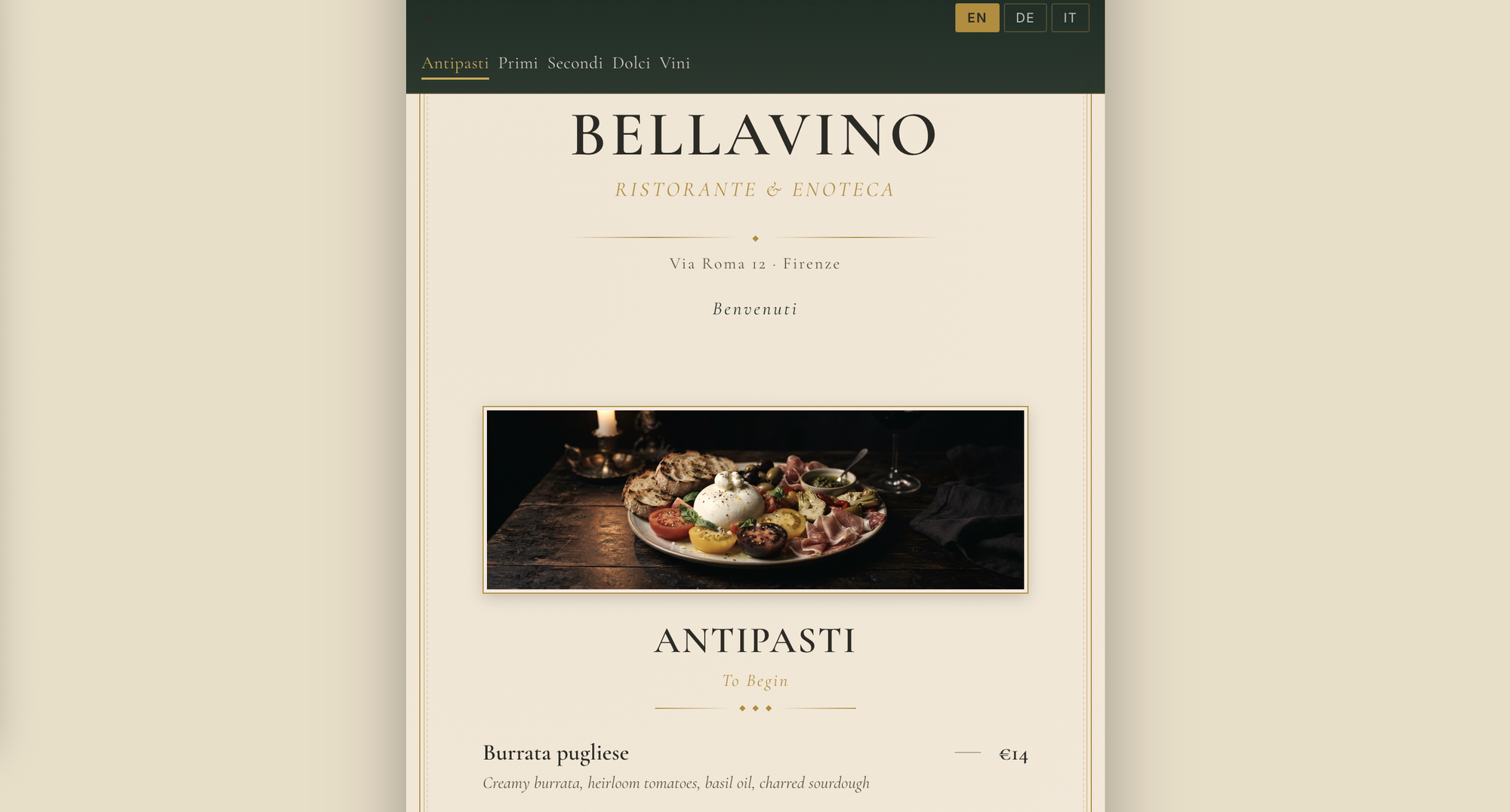
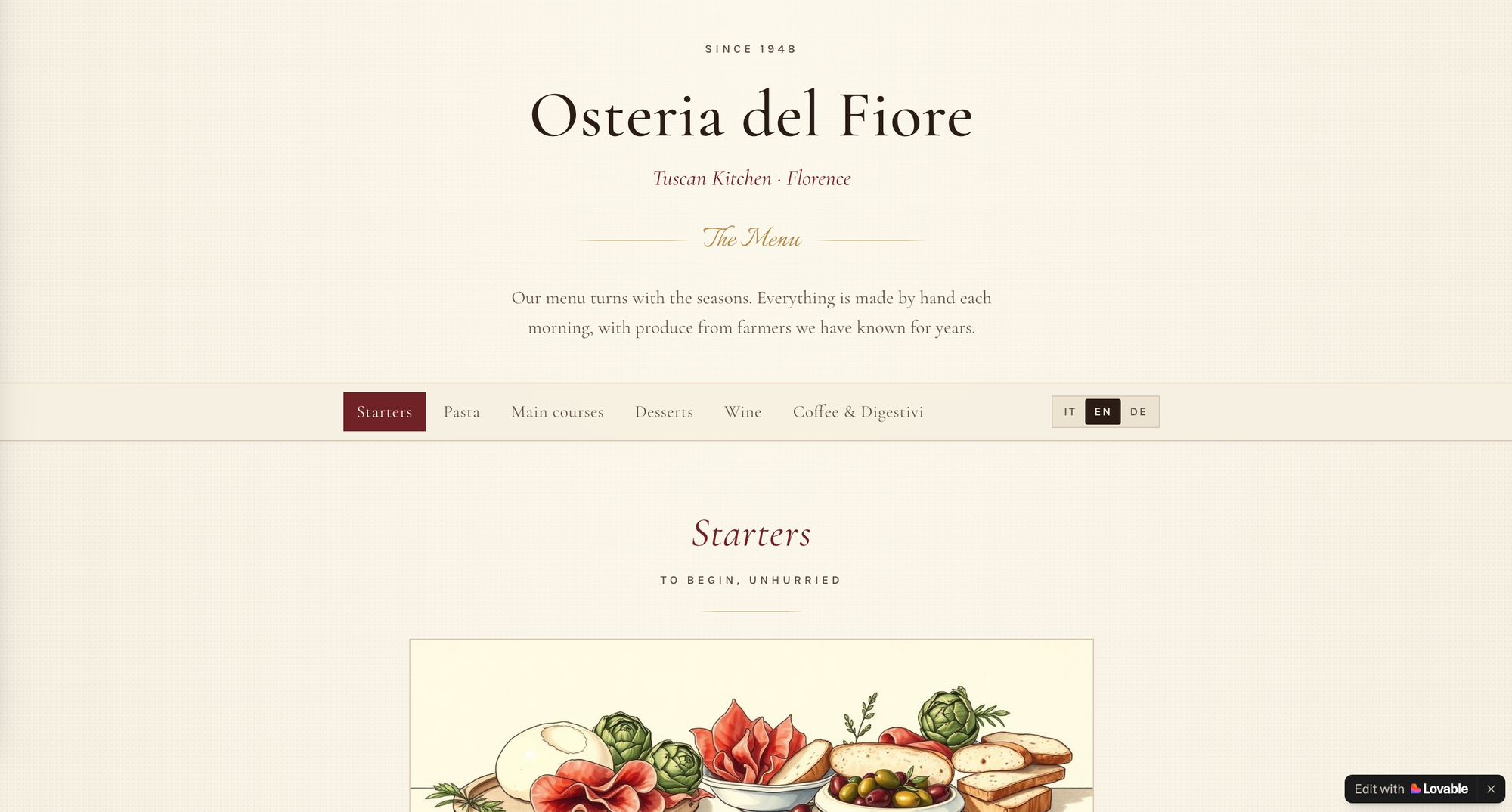
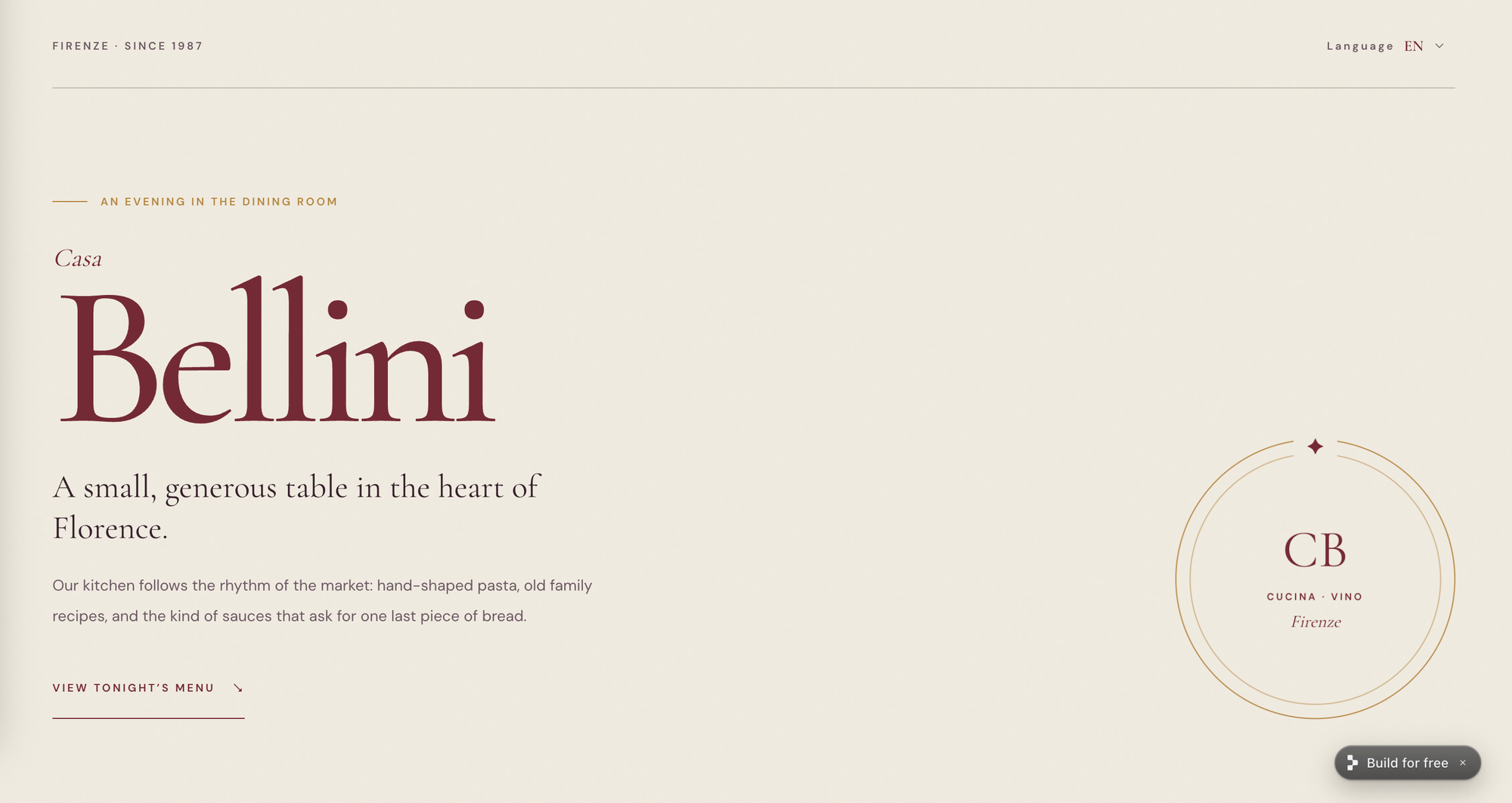
We reused the original scenario: a page that looks and feels like a high-end Italian restaurant menu, multilingual (English, German, Italian), with section navigation.
It's deliberately small. Small enough to finish on a free tier, big enough that the differences between the platforms actually show up.
Getting started
No meaningful difference. Sign up free, type your idea, start building. All three get you from landing page to running agent in under a minute.
Plan mode
All three have a planning step that interrogates your idea before writing code — asking clarifying questions to narrow down what you actually want.
We skipped it here because a restaurant menu is straightforward. But it matters as projects grow, and there's one gotcha worth knowing: on Replit's free Starter plan, Plan Mode is locked behind a Core upgrade. Lovable charges 1 credit per Plan mode message. If you're evaluating on free tiers, that's an asymmetry to plan around.
Kanban and task tracking
This is more nuanced than "who has a board."
Replit has a task board with Drafts / Active / Ready / Done columns. But the tasks are agent-generated — Agent creates them behind the scenes when it decides that helps. It's a window into what the agent is doing, not a backlog you drive.
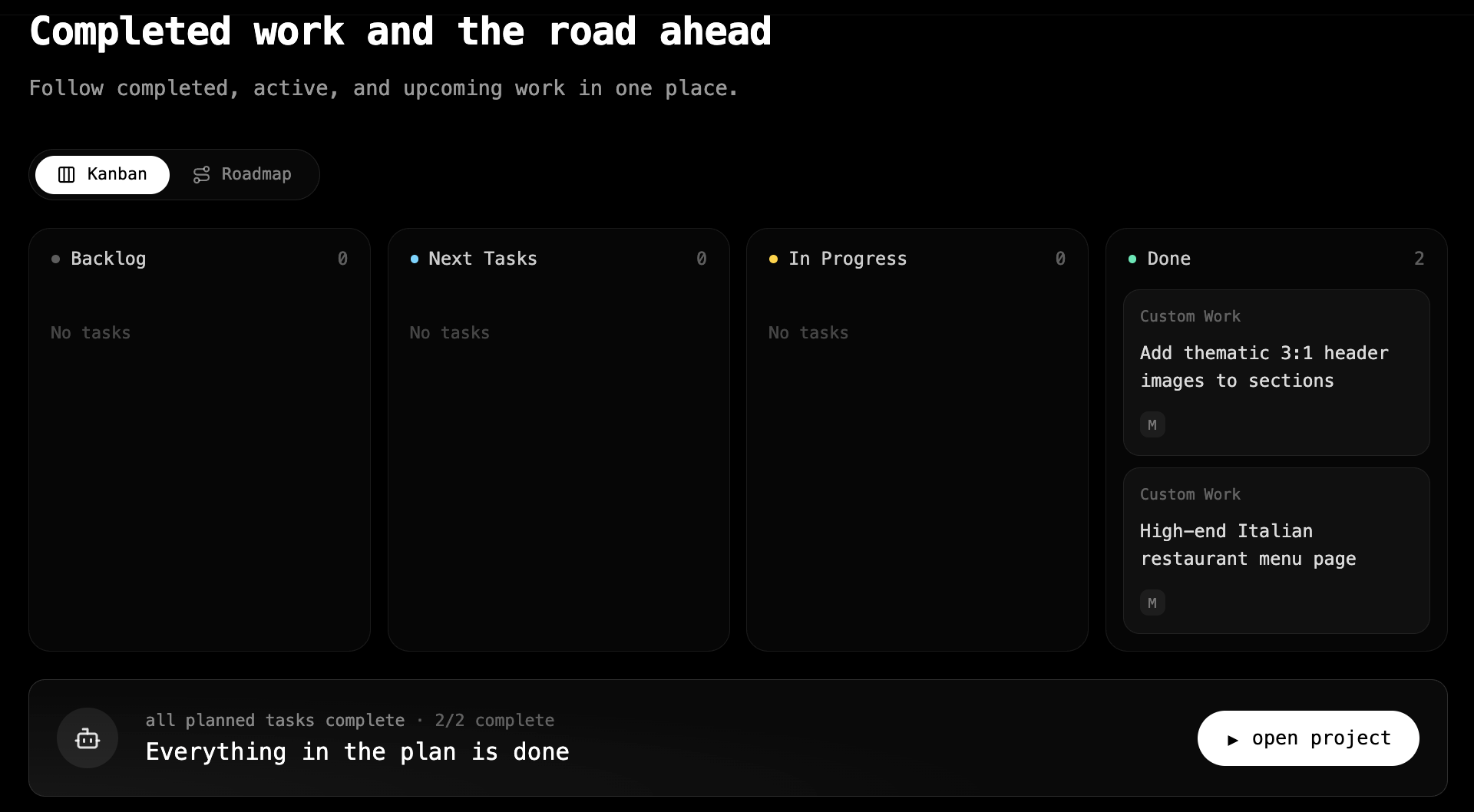
pre.dev has a genuine project management layer: a Backlog / Next Tasks / In Progress / Done kanban where you can drag cards, reorder upcoming work, and open stories to edit them. Work is structured as milestones → stories → subtasks with acceptance criteria, and there's a Gantt-style timeline view. It also syncs to Linear or Jira.
Lovable doesn't offer a kanban view.
For a digital menu, none of this matters. For anything with more than a handful of features, the difference between "watch the agent's task list" and "own the roadmap" is real.
Architecture and stack
pre.dev's clearest differentiator. Its architect agent researches the idea and produces a full spec — requirements, architecture, tech stack, milestones, complexity estimates — that you review and adjust before implementation starts. You can choose between a Fast spec for scoping and a Deep spec for granular breakdowns.
Practically, this means you can steer it toward tools you already know or are required to use. It also reverse-engineers existing repos (/reverse) and continues in their patterns rather than starting fresh. And you can ground it in real documentation — passing links to API docs for something like Stripe makes the spec reason from actual implementation details rather than guessing.
Lovable and Replit both make solid stack choices on your behalf. They're just less interested in negotiating them with you.
Watching it build
The biggest experiential difference, and mostly a matter of taste.
Lovable and Replit are more abstracted — you get a clean progress narrative while the machinery stays behind the curtain.
pre.dev is verbose. You see the agent reason, watch each step execute, see it launch a browser to check the app is actually running. None of it is necessary. But it means you can catch a bad turn early and steer with a chat message, and later go back and understand why a decision was made. If you like knowing what's happening, you'll prefer it. If you find it noisy, you won't.
All three support parallel work. pre.dev calls them sessions — each gets its own conversation and git branch, merged back through a PR (web sessions need a GitHub connection). Replit runs parallel tasks. Useful on bigger builds, irrelevant on a menu.
Model configuration
Worth being precise, because the marketing around this gets loose.
Replit lets Core and Pro builders pick a model in Power or Max Mode, with an Effort control for reasoning depth. On free Starter, you get intelligent routing and no choice.
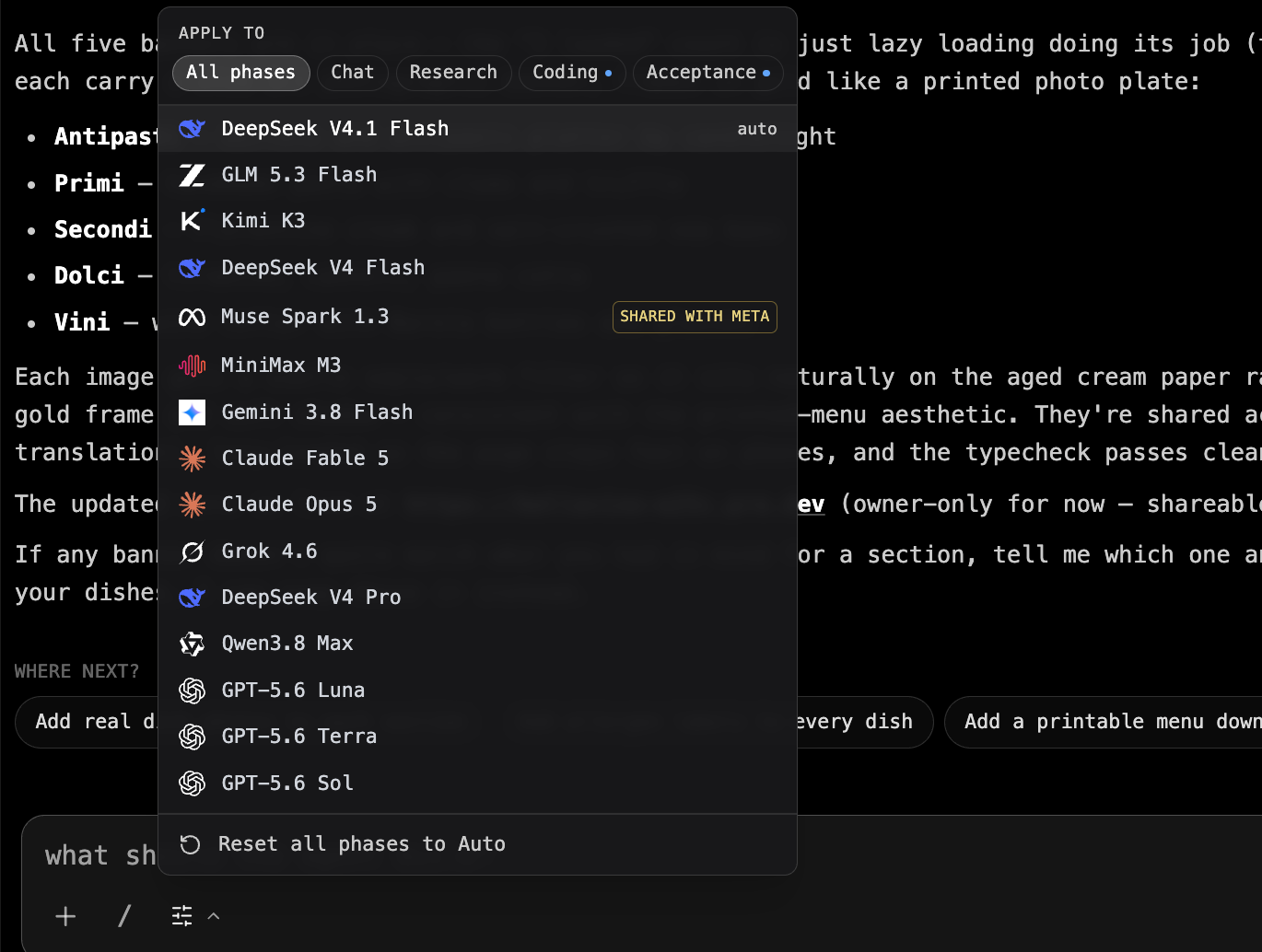
pre.dev is the only one of the three that lets you assign models per phase — Chat, Research, Coding, and Acceptance can each run a different model, via /model.
That's a narrower claim than "only pre.dev lets you pick models," but it's the one that actually pays off. You can put a strong reasoning model on planning and verification while running a cheaper, faster one for the code itself — which is a very reasonable trade now that most coding models are strong. On a metered free tier, that's the difference between finishing and not.
Making changes
All three handle iteration the same way and handle it well: describe the change, the agent implements it. Adding a fourth language to the menu was a one-sentence request on every platform.
This is the part that quietly matters most for a restaurant owner. Chat is the CMS. There's no admin panel to learn and no developer to email.
Images
All three generate images natively.
Subjectively: pre.dev's and Replit's section headers came out similar and modern. Lovable's looked a little dated to us — closer to what AI image generation was producing a year ago — while the other two felt current. Reasonable people will disagree, and model lineups change fast.
Results
All three did the job well, and the design implementation was genuinely spot-on across the board. If we had to pick, Replit's take on design felt freshest. But this is a coin flip between three good outcomes, not a ranking.
Deployment
One-click deploy with a project subdomain on all three. pre.dev serves apps on .pre.dev URLs with HTTPS; all three support custom domains.
One free-tier caveat that's easy to miss: Replit's Starter plan includes one free published app, and it expires after 30 days. It also carries a "Made with Replit" badge until you upgrade. Fine for a demo, not fine for a restaurant that expects its menu to still be there next month.
Marketing and analytics
Lovable wins this outright, and it's not close.
Analytics are built in and start collecting the moment you publish — visitors, page views, views per visit, visit duration, bounce rate, plus breakdowns by traffic source, top pages, device, and location. Nothing to set up. There's also an SEO and AI-search review tool with live Semrush keyword data, and a Google Search Console integration.
Replit and pre.dev give you application-side monitoring, but not marketing analytics in the classic sense. For a restaurant that wants to know whether anyone is finding the menu, Lovable hands you the answer for free.
Security
Our first instinct was that Replit wins here. It's more complicated than that.
Replit has the deepest ceiling. Its Security Agent runs at three levels: dependency checks plus static analysis; a deep white-box agentic codebase review; and white-box plus black-box scanning together — mapping your architecture, building a threat model, and checking whether vulnerabilities are actually exploitable in production. Automatic dependency scanning runs free, but the Agent security scans are for paid builders.
Lovable has the more accessible floor. Basic Scan (config and dependency checks, RLS policy linting) and Deep Scan (agentic code review, access control, endpoint protection) are built in at no extra cost on all plans. Wiz and Aikido integrations add enterprise scanning and AI-driven penetration testing on top, billed separately.
So: Replit if you want the most thorough audit available and will pay for it, Lovable if you want meaningful scanning on a free tier. Either way, a static restaurant menu doesn't need it — but the calculus changes the moment you add a booking form or take a payment.
Cost
We built all three on free tiers. Here's how they actually differ, because this shaped the whole experience:
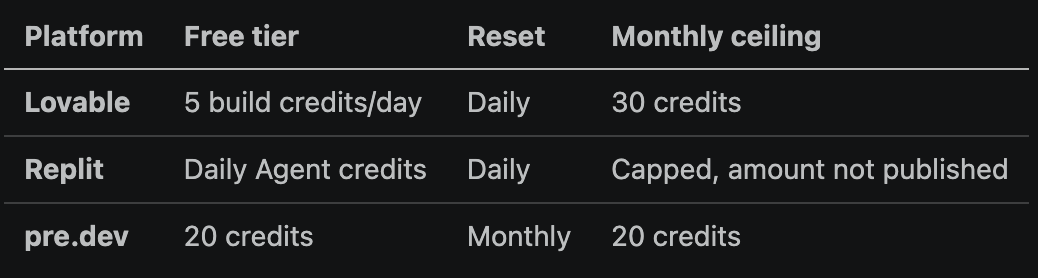
There are two different things going on here, and they cut in opposite directions.
Shape: Lovable and Replit meter you daily. pre.dev gives you a monthly pool to spend however you like. That favors pre.dev if you want to sit down and finish something — the original menu build used 19 of 20 credits in a single session, which a daily cap simply would not have allowed.
Ceiling: Lovable's 30/month is higher than pre.dev's 20/month. And since that menu consumed 19 credits, pre.dev's free tier realistically means one small project per month. If you plan to build several things, or iterate heavily on one, you will hit the wall on pre.dev sooner.
(Credits aren't a common currency — one pre.dev credit and one Lovable credit don't buy the same amount of work — so read these as shapes of a limit, not an exchange rate.)
The daily shape bit us in practice. On Lovable, the second phase of the build cut off right before the generated images made it onto the page. The images existed; they just weren't placed. We came back the next day to finish.
This is also where per-phase model selection stops being a spec-sheet feature. Choosing a more efficient model for the coding phase stretches a fixed credit pool considerably further.
Taking it further
One thing worth calling out: pre.dev ships a CLI. A one-line install (curl -fsSL https://pre.dev/install | bash, macOS and Linux) puts the agent in a local project directory, where it reads and edits files directly while staying connected to your pre.dev project for history and planning artifacts.
That means you can work in your own editor with a terminal open and inspect every change as it lands — the granular experience, with the same agent behind it. Lovable syncs your code two-way with GitHub, GitLab, or Bitbucket, and Replit has its own workspace, but pre.dev is the one that puts the agent itself on your machine.
For a restaurant owner, this is irrelevant. For an agency using the same tool for client MVPs and real codebases, it's the thing that makes it viable.
So which one?
All three shipped a genuinely good digital menu. That's the honest headline, and anyone telling you one of these tools can't build a restaurant menu is selling something.
The differences show up at the edges:
- Lovable if you care about what happens after launch. The built-in analytics and SEO tooling are the best native growth story of the three, and free security scanning is a real perk.
- Replit for the freshest design instincts and the most serious security ceiling — with the caveat that its free tier locks Plan Mode and expires your published app after 30 days.
- pre.dev if you want control: over the stack, over the roadmap, over which model does which job, and over whether the agent runs in a browser or on your laptop. It's the most verbose and the most configurable, and the monthly credit pool is the friendliest for finishing something in one sitting.
For a restaurant owner shipping one menu, pick whichever landing page you like most — you'll be fine. For anything you intend to keep growing, the question is less "which builds better" and more "which one still fits when the project is ten times bigger."
All three builds were done on free tiers. Feature details verified against each provider's documentation at the time of writing; these platforms ship fast, so check current docs before making a decision.
Let Us Know Your Thoughts and Feature Requests
We want to hear from you! We are incredibly excited to see what you build and learn how you are using In-Line Media Generation to accelerate your projects. Join the conversation and share your feedback over on our X and LinkedIn pages.
About predev
pre.dev is built to provide professional engineering teams with hyper-intelligent and cost-efficient coding agents. These agents deliver scalable, self-verifying, and model-agnostic software development.
Professional software development requires agentic coding that deeply understands system architecture, mitigates technical debt, and respects your compute budget.