We Built the Most Advanced AI Coding Agent—Here's Why It Actually Works


The vibe coding revolution is here. But most tools break the moment your project gets serious. We fixed that.
Building software in 2025 looks nothing like it did two years ago. The rise of AI coding tools has fundamentally changed how developers—and increasingly, non-developers—create applications. But there's a problem nobody wants to talk about: most AI coding tools fall apart when projects get complex.
We've spent the last year obsessing over why. And we built something to fix it.
This is the story of pre.dev's newest release—an autonomous AI coding agent that doesn't just generate code, but thinks like a development team.
The Vibe Coding Problem Nobody's Solving
When Andrej Karpathy coined the term "vibe coding" in February 2025, he captured something real: the feeling of describing what you want and watching code materialize. It felt like magic.
The adoption has been staggering. According to Y Combinator, 25% of startups in their Winter 2025 batch had codebases that were 95% AI-generated. Stack Overflow's 2025 Developer Survey shows 65% of developers now use AI coding tools weekly. Google's CEO Sundar Pichai revealed that over 30% of new code at Google comes from AI.
But here's the uncomfortable truth buried in the hype: a July 2025 METR study found that experienced developers using AI tools actually took 19% longer to complete tasks—even though they perceived themselves as 20% faster.
The disconnect is real. And it comes down to one core issue: context management.
Why Current AI Coding Tools Break Down
We've tested them all—Cursor, Lovable, Replit, Bolt, Windsurf. Each has strengths. Each hits the same wall.
The context window problem. MIT Technology Review recently reported that LLMs struggle to hold enough information in their "context window"—essentially their working memory. This means they fail to parse large codebases and forget what they're doing on longer tasks. One developer described it perfectly: "It gets really nearsighted—it'll only look at the thing that's right in front of it."
The architecture blindness. Current tools excel at generating components in isolation. But software isn't isolated—it's hundreds of interconnected modules. When an AI-generated solution works in isolation but breaks the broader system, you've created what developers call "technical debt." GitClear's data shows a significant rise in copy-pasted code and a sharp decline in proper code refactoring since AI tools became mainstream.
The accountability gap. A May 2025 study found 10% of Lovable-created apps had exploitable security vulnerabilities. Apiiro's research showed AI-generated code introduced 322% more privilege escalation paths compared to human-written code.
The pattern is clear: vibe coding tools are incredible for prototypes and terrible for production.
The Missing Layer: Planning Infrastructure
Here's what we realized: the problem isn't the AI's coding ability. The problem is that nobody's given it a roadmap.
Think about how real development teams work. You don't hand a junior developer a vague description and say "build it." You give them:
- A product roadmap broken into milestones
- User stories with clear acceptance criteria
- Technical architecture decisions
- A way to verify their work before moving on
Current AI coding tools skip all of this. They jump straight from "I want an app" to "here's some React code"—with no planning layer in between.
pre.dev is that planning layer, now with a native coding agent environment built in.
How pre.dev Actually Works
When you start a project in pre.dev, you don't need to know a single technical term. Here's the workflow:
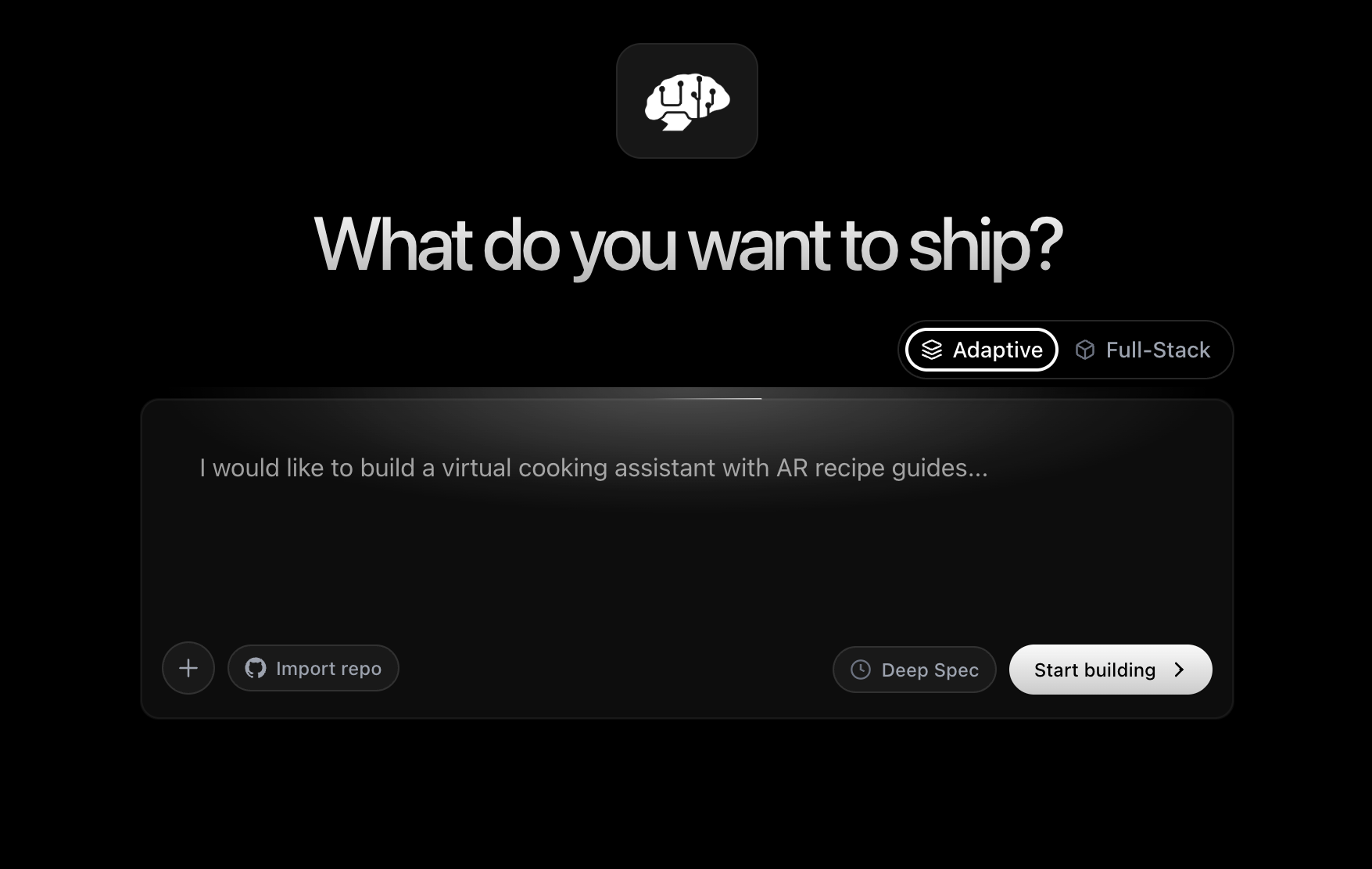
1. Describe your idea in plain English.
That's it. No tech stack decisions. No file structure planning. No environment setup. Just: "I want to build an anonymous note marketplace for college students with a dark theme and purple accents."
2. The AI researches and architects.
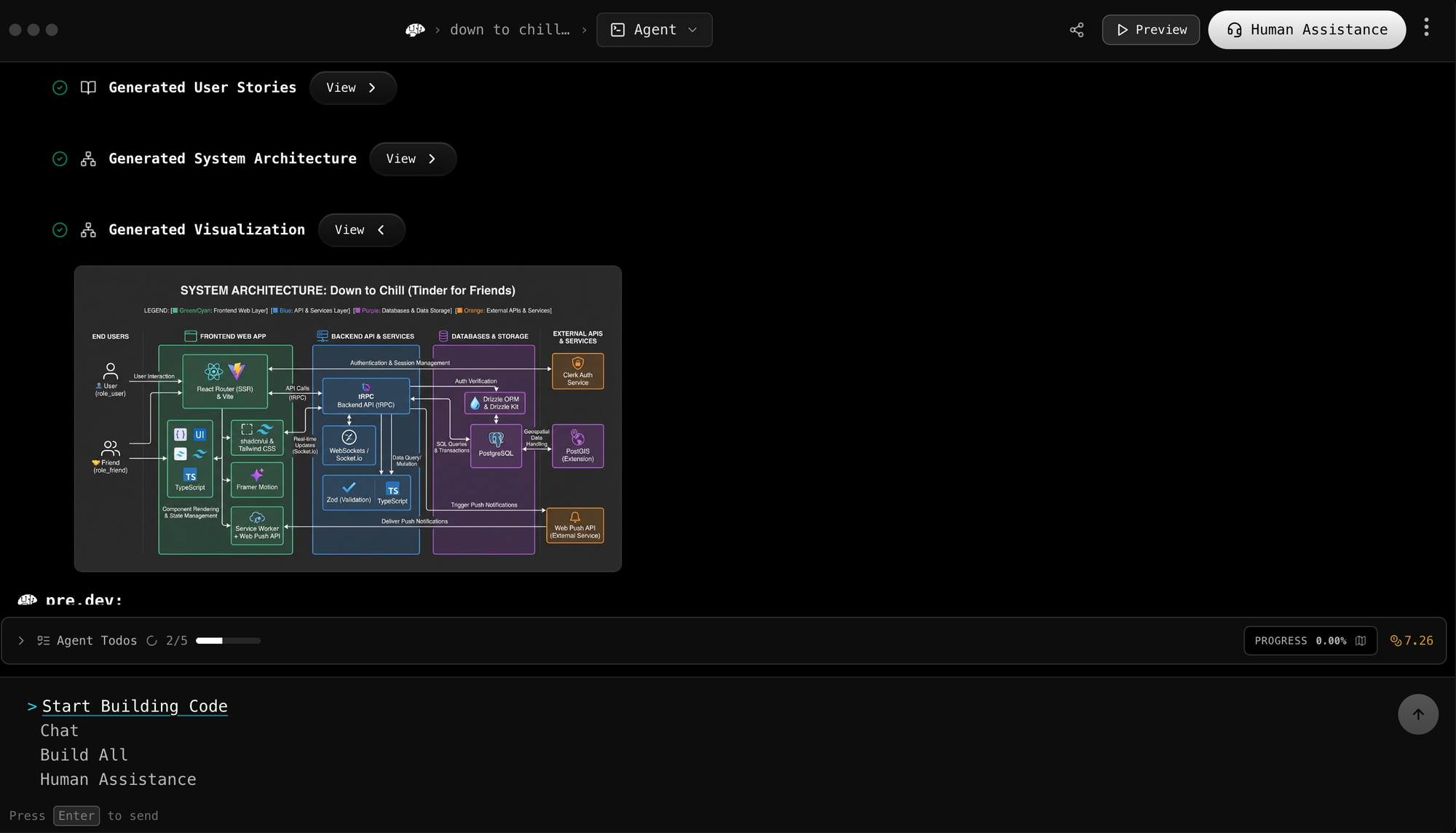
Before writing a single line of code, our agent researches technical patterns and market context for your specific idea. It then generates:
- Complete user flows (buyer journey, seller journey, admin dashboard)
- Tech stack recommendations with justifications
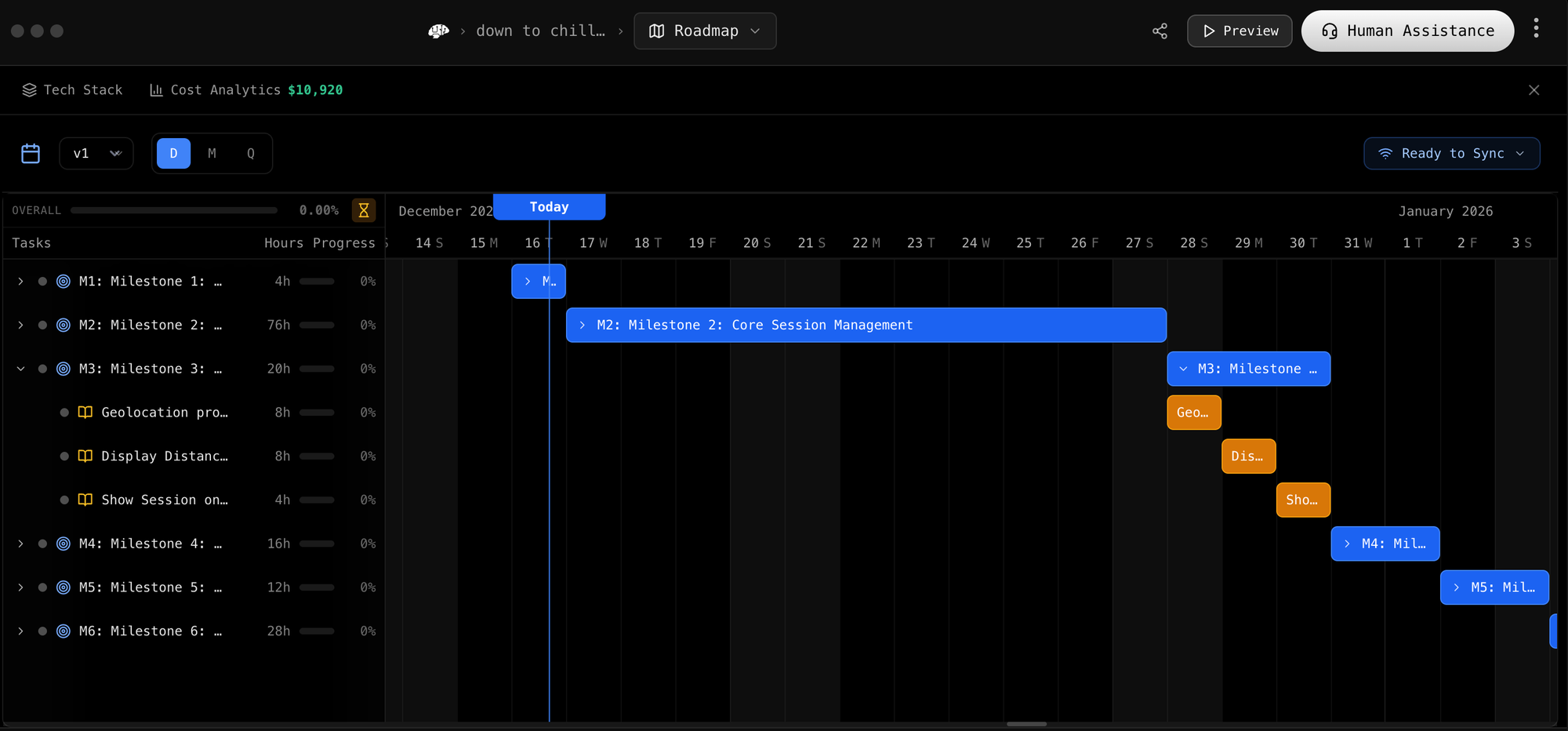
- User stories broken into milestones
- A visual Gantt chart roadmap
- Cost and time estimates
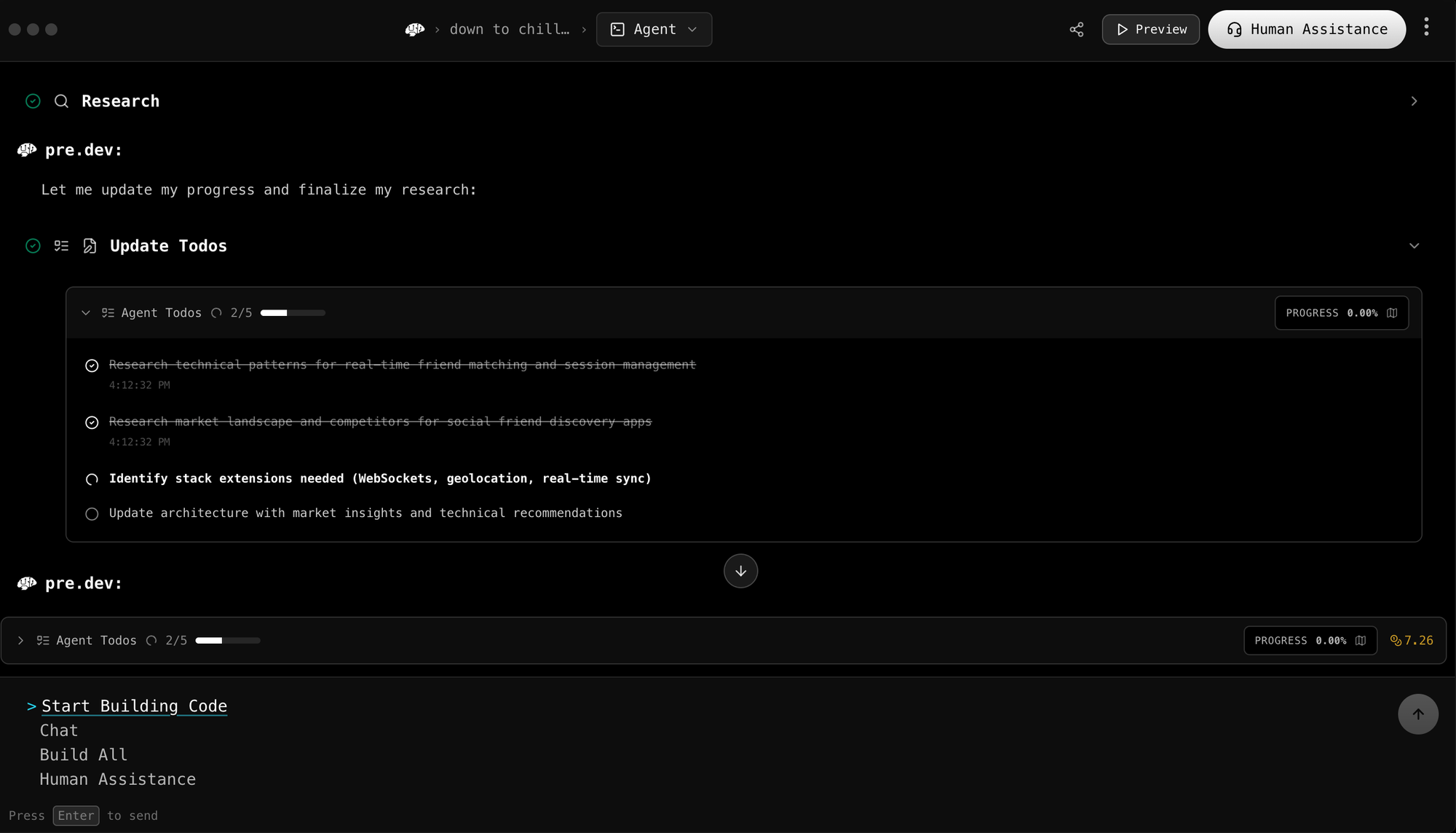
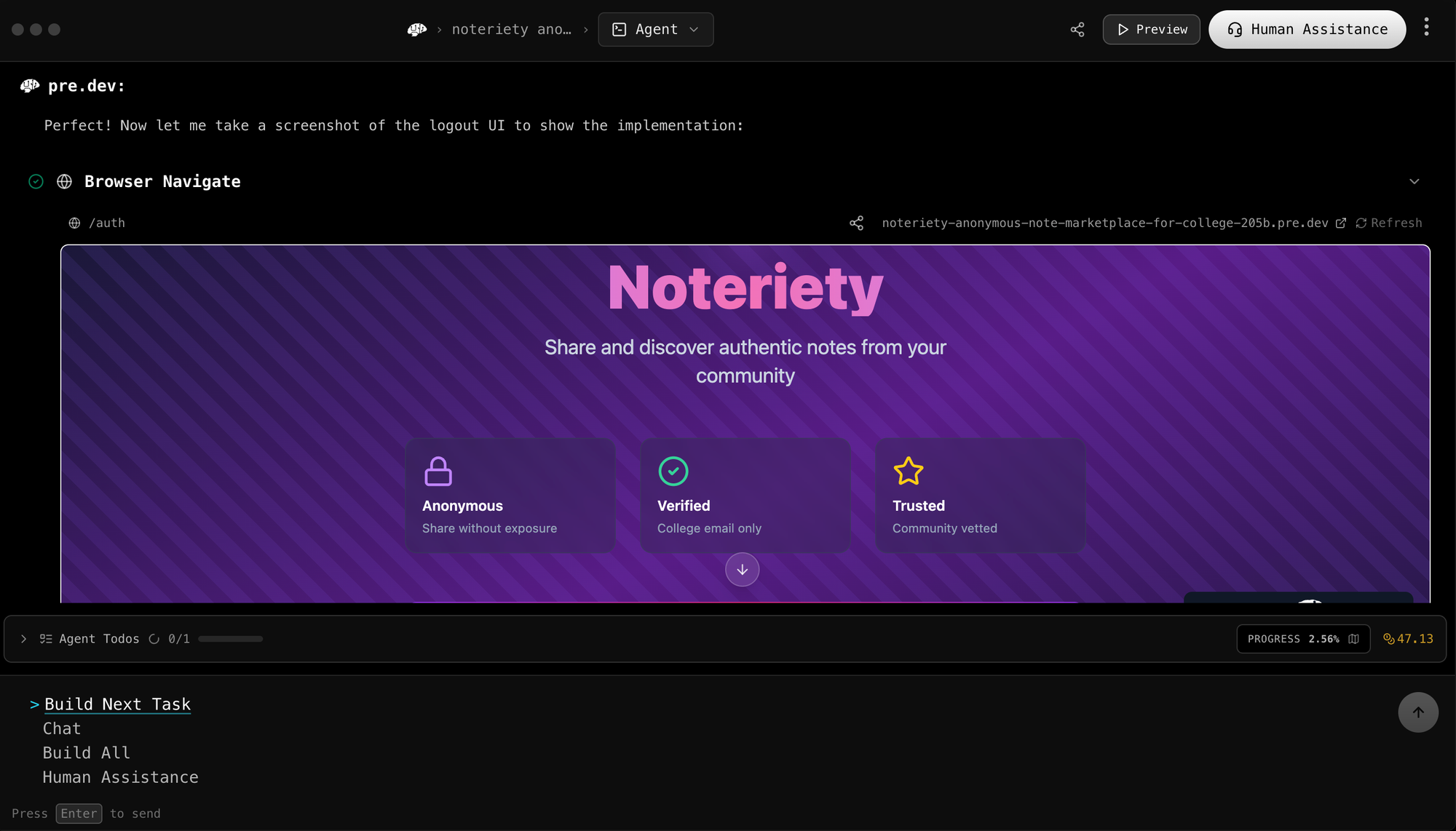
3. Each task gets isolated context. Just click "Build Next Task" or "Build All" for autop - no prompting necessary.
Here's the key innovation: instead of dumping your entire project into one context window and hoping the AI remembers everything, pre.dev delegates individual tasks to focused coding agents. Each agent wakes up with exactly the context it needs for that specific task—nothing more, nothing less.
4. Forced verification at every step.
The agent can't mark a task complete until it verifies acceptance criteria—visually checking the browser, running type checks, linting code. No more "it looks beautiful but it's riddled with bugs."
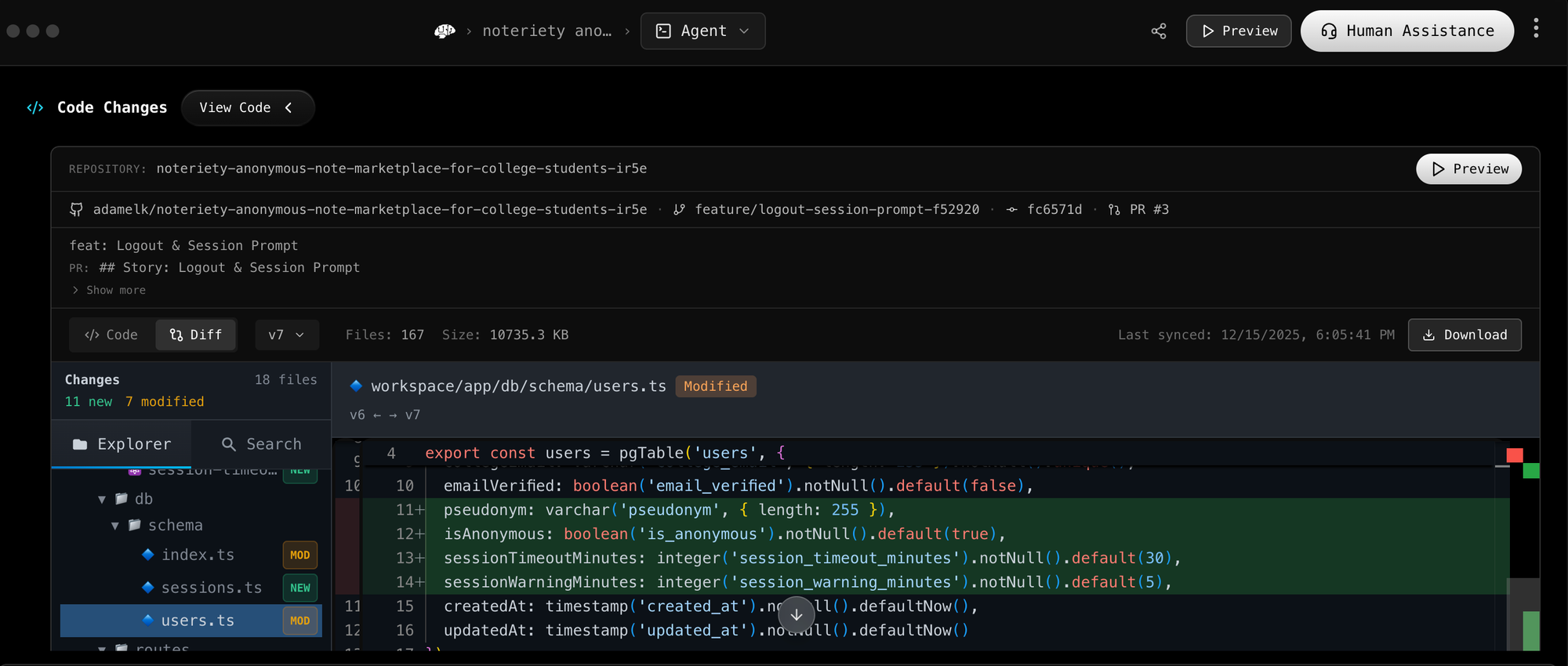
5. Automatic GitHub integration.
Every completed task creates a feature branch, commits changes, and opens a pull request. The AI never pushes to main. You maintain full control over what gets merged.
What Makes This Different From Lovable, Replit, or Cursor?
Lovable and Replit are phenomenal for quick prototypes. You describe something, you get a working demo in minutes. But they use fixed tech stacks, struggle with backend complexity, and provide limited control over architecture decisions. They're optimized for "wow, it works!" moments—not production deployments.
Cursor and Windsurf are developer tools. They assume you know what you're building and how. They're AI-assisted IDEs, not autonomous builders. Incredible for professional engineers; intimidating for everyone else.
pre.dev sits in the middle—and that's intentional.
You get the accessibility of Lovable (zero tech experience required) with the power and flexibility of Cursor (any stack, full GitHub integration, production-ready code). The orchestration layer means you're not just vibe coding—you're building with direction.
One way to think about it: Lovable gives you a demo. pre.dev gives you a dev team.
The Real Cost Comparison
Traditional MVP development costs between $15,000 and $50,000, with complex projects reaching $150,000 or more. Timelines stretch 3-6 months minimum.
With pre.dev's $50 plan, you can build a complete, production-ready application—not just an MVP, but a full product—by clicking essentially one button. No hiring developers. No managing agencies. No six-month timelines.
For founders who've gotten quotes from development shops, this isn't incremental improvement. It's a category shift.
When You Still Need Humans
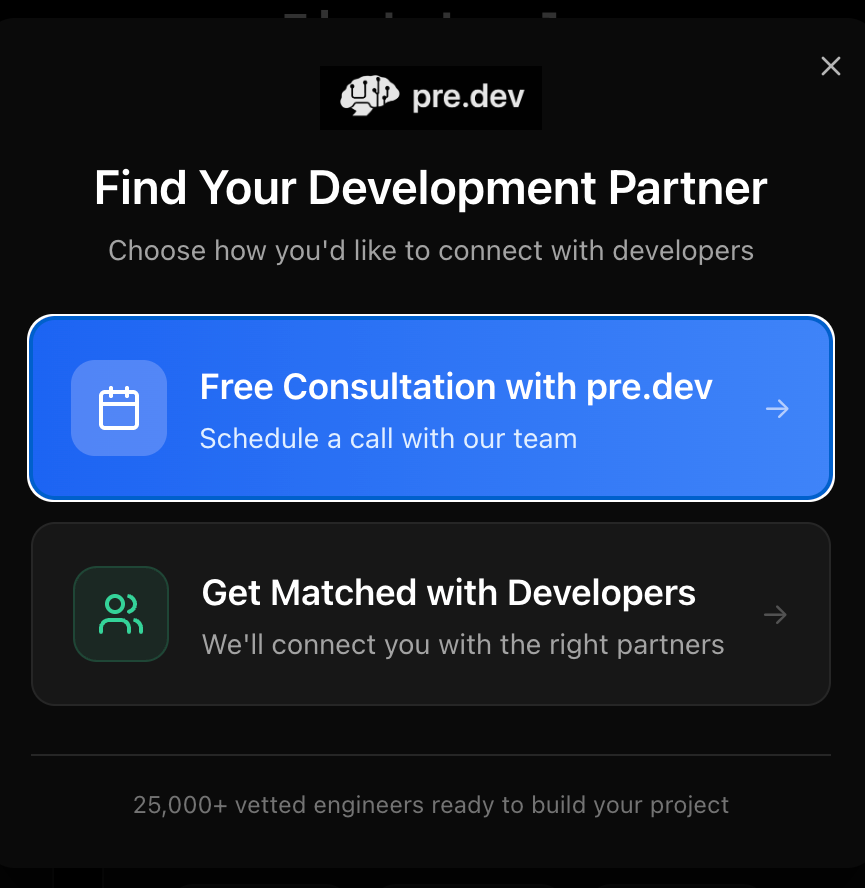
We're not claiming AI replaces development teams entirely. Here's when our human assistance network matters:
- Taking something to production with compliance, security audits, and scaling requirements
- Debugging edge cases that require deep domain expertise
- Integrating with legacy systems that have undocumented quirks
- Building features beyond the AI's current capabilities
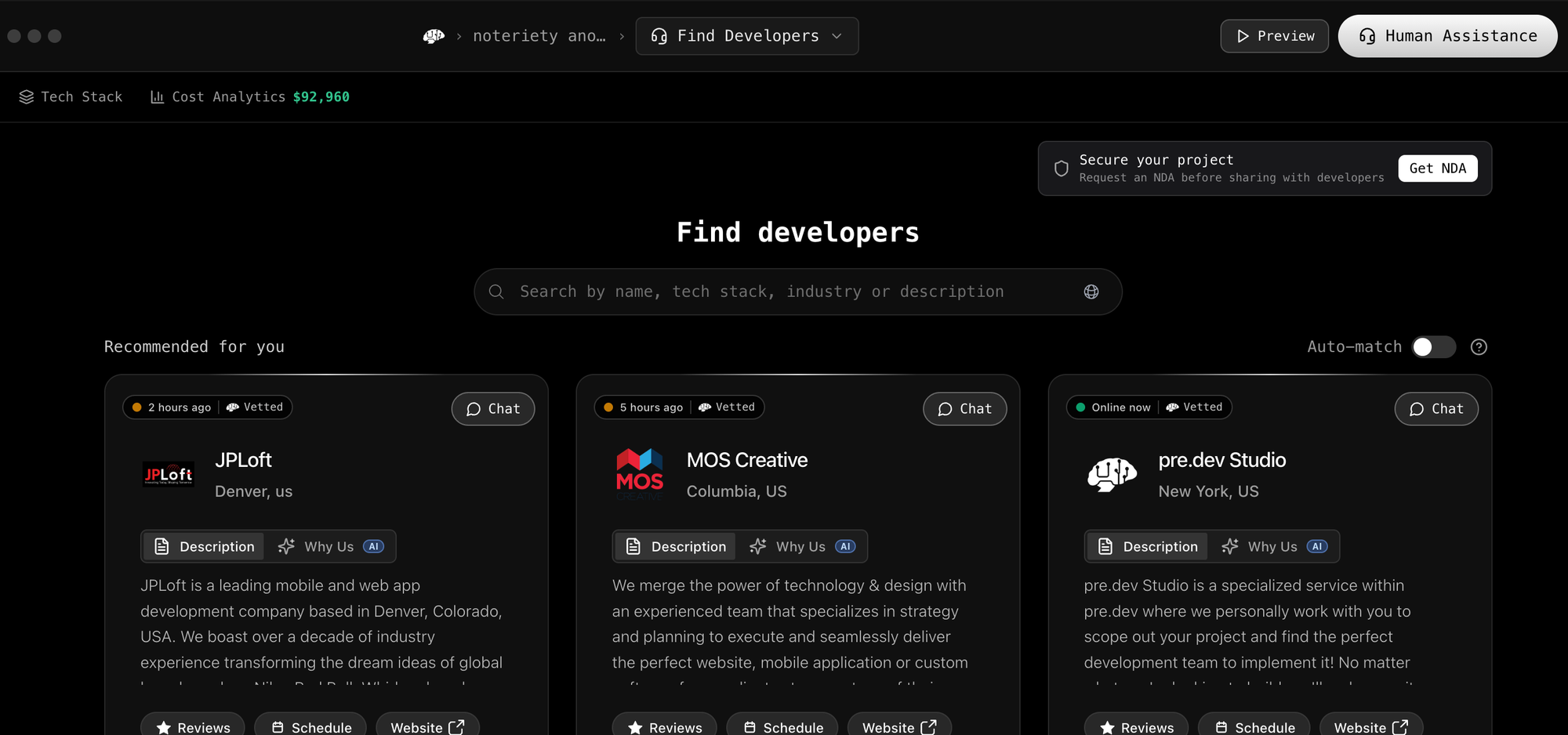
pre.dev includes a built-in network of vetted development agencies. If you hit a wall, you can get quotes from multiple shops—already aligned to your architecture and roadmap—within hours instead of weeks. No more Upwork roulette.
The Paradigm Shift in Vibe Coding
Raymond Kok, CEO at Mendix, warned that vibe coding is "deeply unreliable for enterprise use." He's right—if you're talking about vibe coding without guardrails.
But that's exactly what pre.dev changes. By adding an orchestration layer that:
- Plans before coding
- Breaks work into focused tasks
- Verifies acceptance criteria
- Maintains architecture consistency
- Integrates with professional workflows (GitHub, Linear, Jira)
...you get vibe coding with a seatbelt. Vibe coding with GPS directions. Vibe coding that actually ships.
The MIT Technology Review recently noted the industry shift "from vibe coding to context engineering." That's precisely what we've built: context engineering as infrastructure.
Try It Yourself
We're live streaming builds, showing the imperfect process, and letting you see exactly how it works.
pre.dev is available now. Plans start free, with full production builds available to start on plans from $25-$99.
Whether you're a non-technical founder who's been quoted $50K for an MVP, a developer tired of boilerplate setup, or an agency looking to accelerate client delivery—this is built for you.
The most advanced coding agent on the planet isn't about replacing developers.
It's about giving everyone access to one platform, to MVP and beyond.
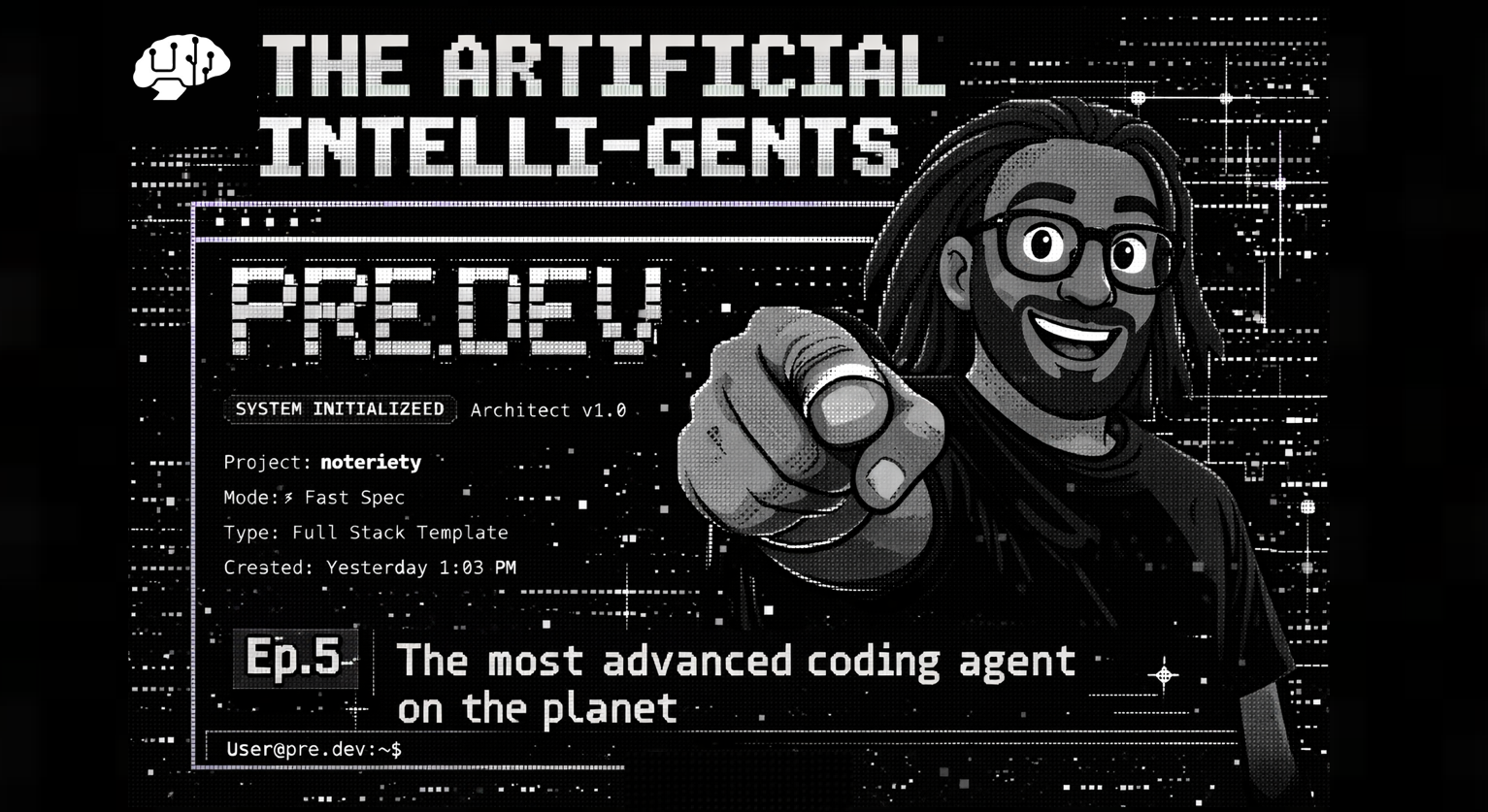
Watch the full demo on Ep.5 of the Artificial Intelli-Gents podcast: https://www.youtube.com/watch?v=HwyyEV-dvm0&t=269s
Start building: https://pre.dev
pre.dev is built by Adam and Arjun, Penn M&T graduates who have built a marketplace serving 700+ agencies and 25,000+ developers. The platform focuses on planning infrastructure for AI coding tools—because the best code starts with the best plan.
Sources
Vibe Coding & Adoption Stats
Y Combinator 25% AI-generated codebases:
Wikipedia - Vibe Coding https://en.wikipedia.org/wiki/Vibe_coding "In March 2025, Y Combinator reported that 25% of startup companies in its Winter 2025 batch had codebases that were 95% AI-generated."
Andrej Karpathy coining "vibe coding" (February 2025):
Wikipedia - Vibe Coding https://en.wikipedia.org/wiki/Vibe_coding "Computer scientist Andrej Karpathy, a co-founder of OpenAI and former AI leader at Tesla, introduced the term vibe coding in February 2025."
Stack Overflow 65% weekly usage:
MIT Technology Review - "AI coding is now everywhere" https://www.technologyreview.com/2025/12/15/1128352/rise-of-ai-coding-developers-2026/ "According to Stack Overflow's 2025 Developer Survey... 65% of developers now using them at least weekly."
Google 30% AI-generated code:
Technology Magazine - "Vibe-Coding: The Future of Code or Just a 'Short-Term Con'?" https://technologymagazine.com/news/vibe-coding-the-future-of-code-or-just-a-short-term-con "Sundar Pichai, Google's CEO, reveals that over 30% of new code developed at Google comes from AI."
97% of engineers using AI coding tools:
The Intellify - "35 Best Vibe Coding Tools" https://theintellify.com/best-vibe-coding-tools/ "A 2025 survey revealed that 97.5% of companies have integrated AI into their software engineering processes. Another study from GitHub found that 97% of engineers are using AI coding tools."
METR Study (Productivity Paradox)
19% slowdown + perception gap:
METR - "Measuring the Impact of Early-2025 AI on Experienced Open-Source Developer Productivity" https://metr.org/blog/2025-07-10-early-2025-ai-experienced-os-dev-study/ "Surprisingly, we find that when developers use AI tools, they take 19% longer than without—AI makes them slower... After the study, developers estimated that they were sped up by 20% on average when using AI—so they were mistaken about AI's impact on their productivity."
TechCrunch coverage:
TechCrunch - "AI coding tools may not speed up every developer, study shows" https://techcrunch.com/2025/07/11/ai-coding-tools-may-not-speed-up-every-developer-study-shows/
InfoQ coverage:
InfoQ - "AI Coding Tools Underperform in Field Study with Experienced Developers" https://www.infoq.com/news/2025/07/ai-productivity/
Context Window & Technical Limitations
LLMs struggle with context/memory:
MIT Technology Review - "AI coding is now everywhere" https://www.technologyreview.com/2025/12/15/1128352/rise-of-ai-coding-developers-2026/ "Perhaps the biggest problem is that LLMs can hold only a limited amount of information in their 'context window'—essentially their working memory. This means they struggle to parse large code bases and are prone to forgetting what they're doing on longer tasks."
"Gets really nearsighted" quote:
MIT Technology Review (same article) "It gets really nearsighted—it'll only look at the thing that's right in front of it... And if you tell it to do a dozen things, it'll do 11 of them and just forget that last one."
Indexing failures for large repos:
VentureBeat - "Why AI coding agents aren't production-ready" https://venturebeat.com/ai/why-ai-coding-agents-arent-production-ready-brittle-context-windows-broken "Indexing features may fail or degrade in quality for repositories exceeding 2,500 files, or due to memory constraints."
Security Vulnerabilities
10% of Lovable apps exploitable:
Humai Blog - "Vibe Coding Tools Comparison 2025" https://www.humai.blog/vibe-coding-tools-comparison-2025-cursor-vs-bolt-vs-lovable-vs-windsurf-vs-replit/ "A May 2025 study found 10% of Lovable-created apps had exploitable vulnerabilities."
322% more privilege escalation paths:
Cerbos - "The Productivity Paradox of AI Coding Assistants" https://www.cerbos.dev/blog/productivity-paradox-of-ai-coding-assistants "Apiiro's 2024 research... showed AI-generated code introduced 322% more privilege escalation paths and 153% more design flaws compared to human-written code."
MVP Development Costs
$10K-$50K typical range:
Ptolemay - "MVP Development Cost in 2025" https://www.ptolemay.com/post/mvp-development-costs-and-how-to-save "In 2025, building a Minimum Viable Product (MVP) typically costs startups between $10,000 and $50,000."
Up to $150K+ for complex builds:
SoftTeco - "MVP Development Cost" https://softteco.com/blog/mvp-development-cost "In 2025, the average MVP cost ranges from $15,000 to $150,000 or more."
3-8 week timelines:
Appwrk - "Build an MVP App in 2025" https://appwrk.com/insights/how-to-build-an-mvp-app "MVP development costs and timelines typically range from 3 to 8 weeks and $5,000 to $50,000, depending on the scope."
Industry Commentary
Raymond Kok (Mendix CEO) on enterprise reliability:
Technology Magazine - "Vibe-Coding: The Future of Code or Just a 'Short-Term Con'?" https://technologymagazine.com/news/vibe-coding-the-future-of-code-or-just-a-short-term-con "Raymond Kok, CEO at Mendix... says that while vibe coding is fast and creative, it is deeply unreliable for enterprise use."
"Vibe coding to context engineering" shift:
MIT Technology Review / Thoughtworks - "From vibe coding to context engineering: 2025 in software development" https://www.technologyreview.com/2025/11/05/1127477/from-vibe-coding-to-context-engineering-2025-in-software-development/ "2025 has seen a significant shift in the use of AI in software engineering—a loose, vibes-based approach has given way to a systematic approach to managing how AI systems process context."
Microsoft on vibe coding democratization:
Microsoft Source - "'Vibe coding' and other ways AI is changing who can build apps" https://news.microsoft.com/source/features/ai/vibe-coding-and-other-ways-ai-is-changing-who-can-build-apps-and-how/ "Vibe coding is actually allowing more people to create with technology."